

Saudi Arabia’s Personal Data Protection Law (PDPL) places clear obligations on organizations to demonstrate accountability, transparency, and control over how personal and sensitive data is handled. These requirements apply across customer, employee, vendor, and digital data environments.
In practice, PDPL compliance goes far beyond written policies. Organizations must understand where personal data resides, how it flows across systems and third-party platforms, who has access to it, and how consent, data subject rights, incidents, and risk assessments are managed operationally. Limited visibility or fragmented controls often create compliance gaps and regulatory exposure.
To address these challenges, TNG operates as a strategic partner delivering PDPL compliance solutions powered by Data Sentinel a specialized data privacy and compliance firm with established experience in regulatory alignment, operational workflows, and continuous compliance management.
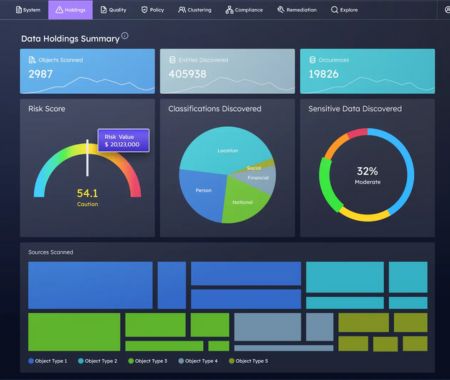
Under Saudi Arabia’s PDPL, organizations are required to understand where personal data resides, how it is processed, and how it moves across systems and third parties. Data mapping and discovery form the foundation of PDPL compliance by providing visibility into personal and sensitive data across the organization.
Without accurate data mapping, organizations face increased compliance risk, including incomplete consent tracking, delayed responses to data subject requests, and limited ability to manage data incidents. PDPL data mapping enables organizations to identify gaps, reduce exposure, and establish accountability across business units and IT environments.
The Nomadix Cloud upgrades the guest experience while simplifying the management and a property’s network support. Our fully integrated suite of tools is designed to be deployed and scaled to many thousands of properties from one.
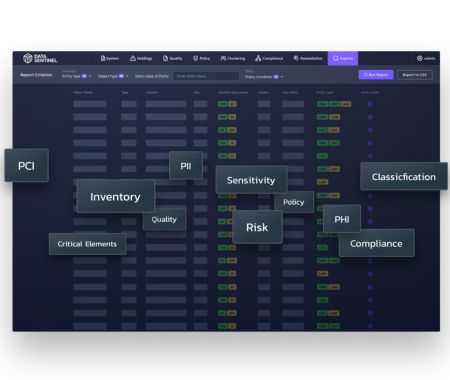
Under Saudi Arabia’s PDPL, organizations are required to apply appropriate safeguards based on the sensitivity and purpose of personal data processing. Smart data classification supports PDPL compliance by enabling organizations to clearly identify personal and sensitive data and apply controls that align with regulatory expectations.
Without proper classification, organizations often apply inconsistent security and retention rules, increasing the risk of unauthorized access, excessive data retention, and non-compliance with PDPL principles such as data minimization and purpose limitation.
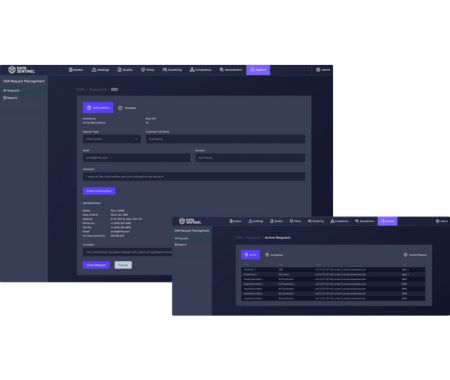
Saudi Arabia’s PDPL grants individuals specific rights over their personal data, including the right to access, correct, and request deletion of their information. Organizations are required to respond to these Data Subject Access Requests accurately, within defined timelines, and in a manner that can be demonstrated to regulators if required.
Manual or fragmented handling of DSARs increases the risk of missed deadlines, inconsistent responses, and incomplete records. These gaps can expose organizations to regulatory scrutiny and reputational damage, particularly as request volumes increase.


Bandwidth management tools allow users to control the amount of bandwidth available to their guests. More efficient use and better optimization of existing bandwidth lead to better internet quality and greater guest satisfaction.
Under Saudi Arabia’s PDPL, personal data must be processed based on a lawful basis, which in many cases requires clear and explicit consent from the data subject. Consent management ensures that organizations can demonstrate when, how, and for what purpose consent was obtained, modified, or withdrawn.
Inadequate consent tracking exposes organizations to significant compliance risk, particularly where consent is outdated, incomplete, or cannot be evidenced. PDPL expects consent to be specific, documented, and revocable, making structured consent management a critical component of data privacy governance.
Saudi Arabia’s PDPL requires organizations to respond promptly and effectively to personal data breaches and privacy incidents. Where a breach poses a risk to individuals, organizations may be required to notify the relevant authority and affected data subjects within defined timelines.
Delayed detection, unclear escalation paths, or incomplete documentation can significantly increase regulatory and reputational risk. PDPL incident management requires clear ownership, structured response processes, and the ability to demonstrate how incidents were identified, assessed, and resolved.
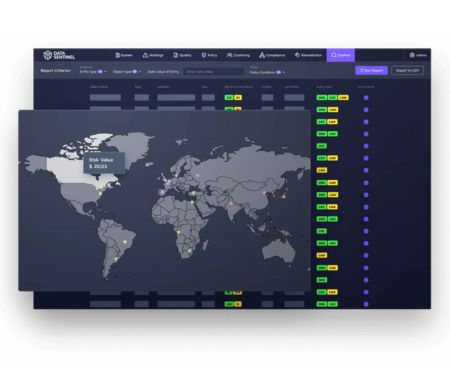
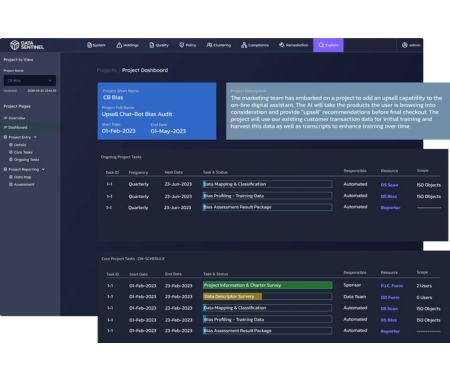
As organizations increasingly use AI and automated decision-making systems, Saudi Arabia’s PDPL principles of lawfulness, fairness, transparency, and purpose limitation continue to apply. AI governance ensures that personal data used in AI models is processed responsibly and in alignment with privacy and data protection obligations.
Without proper governance, AI systems can introduce privacy risks such as unintended data exposure, biased outcomes, or use of personal data beyond its original purpose. PDPL-aligned AI governance helps organizations identify these risks early and apply controls that support accountability and regulatory readiness.
Under Saudi Arabia’s PDPL, organizations are expected to assess privacy risks associated with new or high-risk personal data processing activities. Data Protection Impact Assessments (DPIA) and Privacy Impact Assessments (PIA) help organizations evaluate potential impacts on individuals and ensure appropriate safeguards are implemented before processing begins.
Failing to conduct impact assessments can result in unmanaged privacy risks, inadequate controls, and difficulty demonstrating compliance during audits or regulatory reviews. DPIA and PIA assessments support informed decision-making, accountability, and proactive risk management across the organization.
#21, 6th Floor, Tower 1,
Basmah Towers,
Prince Majed Street,
Jeddah. Saudi Arabia